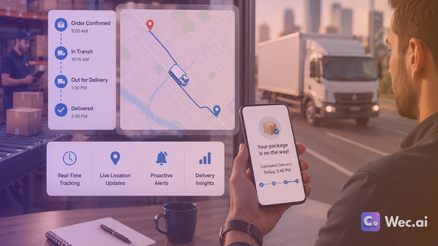
How Voice AI Handles “Where Is My Package?” Calls Automatically
Why “Where Is My Package?” Calls Overwhelm Support
In eCommerce and logistics, one of the most common customer service questions is: “Where is my package?” Often referred to as WISMO (Where Is My Order), these inquiries make up a major portion of inbound support traffic, especially during high-volume sales periods, seasonal peaks, and last-mile delivery surges.
Although the request appears simple, the operational impact is significant. Support teams repeatedly handle the same type of query throughout the day, checking shipment statuses, tracking delays, and providing basic delivery updates. This creates heavy manual workload and reduces the time agents can spend on complex issues such as exceptions, escalations, and customer disputes.
As order volumes scale, traditional support systems such as IVR menus, ticket-based systems, and manual call handling struggle to keep up. Customers expect immediate answers, but delays in response often lead to frustration, repeated calls, and reduced trust in the delivery experience.
Voice AI helps eliminate this bottleneck by enabling real-time conversational support where customers can instantly get accurate delivery updates without waiting for human agents. This becomes especially powerful when combined with real-time delivery updates by AI voice Agents in logistics, which ensure shipment visibility stays updated across the entire delivery lifecycle. Once Voice AI is able to retrieve and respond to WISMO queries instantly, the next improvement is seen in how customers experience real-time delivery communication.
How Voice AI Automates “Where Is My Package?” Calls
Voice AI automates WISMO interactions by integrating directly with logistics systems, order management platforms, and shipment tracking APIs. When a customer initiates a call, the system identifies the intent in natural language and retrieves relevant order details in real time.
Instead of navigating multiple IVR layers or providing tracking IDs manually, customers can simply ask questions like “Where is my order,” “Has my package shipped,” or “When will my delivery arrive.” The Voice AI system interprets these queries, matches them with the correct shipment, and delivers an instant response.
If the package is in transit, the system provides live status updates along with estimated delivery timelines. If there is a delay, the AI communicates updated delivery expectations clearly, ensuring the customer always has accurate and current information.
Instant Delivery Updates Through Conversational Experience
One of the key improvements Voice AI brings to WISMO handling is the quality of interaction. Instead of static tracking updates or generic system messages, customers receive conversational responses that feel natural and easy to understand.
For example, instead of a simple status like “Out for delivery,” the system can respond with “Your package is currently out for delivery and is expected to arrive before 6 PM today. The driver is currently in your area.” It can also add meaningful context such as whether the shipment is on schedule, slightly delayed due to traffic, or waiting at a nearby hub, which gives customers a clearer picture of what is happening in real time.
This level of clarity improves customer confidence and reduces uncertainty around delivery timelines. Customers feel more informed and less likely to call support multiple times for the same update. It also reduces pressure on support teams because most “status checking” calls are resolved instantly within the first interaction itself.
Reducing Repetitive Support Workload with WISMO Automation
WISMO calls represent one of the most repetitive and high-volume workloads in logistics support operations. Each interaction follows a similar pattern, yet traditionally requires manual effort from agents to retrieve tracking information and respond to customers individually.
Voice AI eliminates this repetition by handling these queries at scale through automated conversational workflows. It can manage thousands of simultaneous calls while still delivering consistent and accurate responses across all customers.
This significantly reduces pressure on customer support teams, especially during peak demand periods. Instead of focusing on repetitive tracking inquiries, agents can focus on high-value tasks such as resolving failed deliveries, handling refunds, and managing escalations. With repetitive queries automated, the focus naturally shifts toward handling complex delivery exceptions that still require human intervention.
Human Support for Complex Delivery Exceptions
While most WISMO inquiries are straightforward, certain cases require deeper investigation. Situations such as lost shipments, customs delays, incorrect deliveries, failed delivery attempts, or address mismatches often need human involvement because they involve multiple systems, stakeholders, and operational checks.
Voice AI is designed to handle this transition smoothly. When a query exceeds automated resolution capability, the system intelligently escalates the conversation to a human agent while preserving full conversation history, order context, shipment details, and any previous actions already taken by the AI. This ensures that the customer does not experience any disruption during the transition.
This eliminates the need for customers to repeat their issue, which is one of the biggest frustrations in traditional support workflows. Instead, support teams can immediately continue the conversation with complete visibility into what happened, what the customer reported, and what steps were already attempted by the AI system.
In more advanced logistics setups, these escalation workflows are also connected with real-time operational systems, allowing agents to see live shipment status, driver updates, and delivery exceptions in a single view. These escalation patterns are similar to those used in driver delays and delivery issue handling systems powered by AI Voice Agents, ensuring seamless continuity between customer support, dispatch teams, and last-mile logistics operations. This hybrid support model ensures that while automation handles scale, human agents remain focused on high-value resolution cases.
WISMO Automation as a Competitive Advantage
WISMO interactions are more than just support queries. They represent a key moment in the customer journey where trust, transparency, and communication directly influence brand perception.
Slow or unclear responses can lead to customer dissatisfaction, repeated support calls, and reduced confidence in the delivery process. On the other hand, instant and accurate updates improve the overall post-purchase experience significantly.
Voice AI transforms WISMO handling from a reactive support function into a proactive customer experience layer. By providing real-time, conversational, and always-available delivery updates, businesses reduce operational load while improving customer satisfaction and retention. In a competitive logistics environment, automating WISMO calls is not just a cost-saving measure. It becomes a strategic advantage that directly enhances customer experience and strengthens long-term loyalty.
Have questions about implementing AI Voice Agents in your logistics operations? Reach out to us at ask@wec.ai or explore our AI solutions for the logistics industry.